Top 10 Coolest Jobs in the Navy (Updated List)
Some of the most unusual and interesting military career options are in the United States Navy.
The Navy has roles that match many interests. You might work with advanced aircraft. You could dive deep underwater. You may try out for elite special operations. Cybersecurity and other tech fields also play a major role.
Many Navy jobs come with adventure, focused training, and strong career options after service.

1. Navy SEAL (Elite Special Operations Forces)

Navy SEALs do dangerous missions. They may fight terrorism, raid targets, or gather information. SEALs are part of U.S. special operations, and the Navy trains only a small number of people to do this work.
To qualify, candidates must finish Basic Underwater Demolition/SEAL (BUD/S) training. The training is very hard. SEALs train to work on land, at sea, and from the air. They take on missions that demand strength, teamwork, and calm thinking under pressure.
Why is it cool?
- ✔ You train with modern weapons and gear
- ✔ You may work on high-risk missions around the world
- ✔ You join a small community with strict standards
Post-Navy Employment Prospects
Many former SEALs work in law enforcement. Others work in private security. Some work for the government as advisors.
2. Navy Fighter Pilot (Mastering the Skies)

Operating F/A-18 Hornets and F-35C Lightning II planes from aircraft carriers, Navy fighter pilots fly some of the most modern aircraft in the world.
These pilots run reconnaissance, surveillance, and combat missions. Training takes serious effort and discipline. The job stands out because it combines carrier operations with supersonic flight.
Why is it cool?
- ✔ Fly modern fighter planes from aircraft carriers
- ✔ Take part in high-speed training, air-to-air engagements, and critical missions
- ✔ Build aviation experience that can open strong career options after service
Post-Navy Employment Options
Many former fighter pilots move into civilian aviation. Commercial airlines often look for pilots with advanced flight hours, strong safety habits, and high-pressure decision-making experience.
3. Navy Diver (Investigating Oceanic Depths)

If you enjoy the ocean, becoming a Navy Diver can be a strong career choice. Navy Divers handle search and rescue work, fix ships and submarines underwater, and support deep-sea salvage missions.
Navy Divers rank among the best-trained divers in the world. They prepare for hard conditions, limited visibility, and long hours in cold water.
Why is it cool?
- ✔ Work in deep-sea zones and tough underwater conditions
- ✔ Take part in fast-paced search and rescue missions
- ✔ Train with modern diving equipment used across the fleet
After Navy Career Choices
Many Navy Divers move into civilian roles that use the same skills, such as:
- Commercial diving
- Underwater welding
- Law enforcement diving
4. Nuclear Machinist Mate (Powering the Navy Fleet)
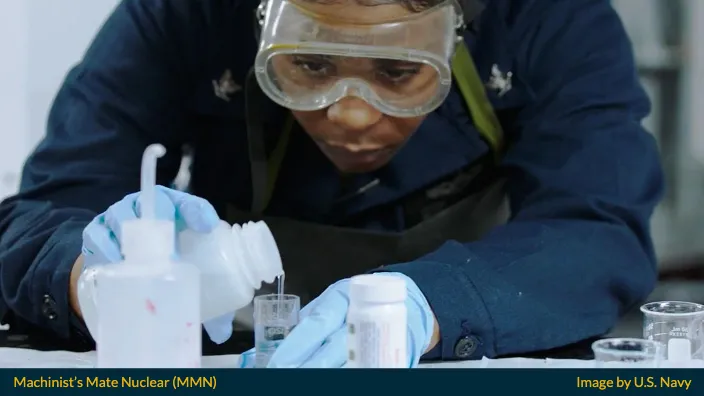
For people interested in engineering and nuclear technology, Nuclear Machinist’s Mates operate and maintain the nuclear reactors that power submarines and aircraft carriers.
This job calls for strong technical skills and focused training. Many Sailors in this field attend Naval Nuclear Power School as part of their pipeline.
Why is it cool?
- ✔ Work with nuclear propulsion systems on submarines and aircraft carriers
- ✔ Build skills in a high-tech field that employers value
- ✔ Qualify for advanced career paths after leaving the Navy
After Navy Career Choices
Many Nuclear Machinist’s Mates move into well-paid civilian jobs tied to power generation and reactor operations, including:
- Nuclear power plants
- Commercial reactor operations
- Related roles in the energy industry
5. Cyber Warfare Technician (Defining the Digital Battlefield)

The Cyber Warfare Technician role has become one of the Navy’s most important and fast-moving jobs. Modern conflict often includes cyber threats. This work sits right in that space.
Cyber Warfare Technicians analyze intelligence data, run offensive cyber operations, and protect military networks from attacks.
Why is it cool?
- ✔ Take part in cyber operations that support national security
- ✔ Work with code, encryption, and threat detection
- ✔ Build skills that translate well to civilian cybersecurity jobs
After Navy Career Choices
Cybersecurity skills carry over to many civilian industries. Common paths include roles in:
- Government agencies
- Banks and financial firms
- Technology companies and security vendors
6. Explosive Ordnance Disposal (EOD) Technician (Navy Bomb Squad)

Navy EOD Technicians find, disarm, and dispose of explosive threats. This work can include IEDs, undersea mines, and other hazardous munitions. The job also involves handling chemical, biological, radiological, and nuclear risks.
EOD Technicians often support joint teams and special operations units, including Navy SEALs. The work carries real danger. It also offers a clear mission and high responsibility.
Why is it cool?
- ✔ Deal with high-risk explosives where precision matters
- ✔ Use advanced robotics and bomb disposal tools
- ✔ Support elite operations with Navy SEALs and other special forces
After Navy Career Choices
Many former EOD Technicians move into civilian jobs that value the same training, such as:
- Law enforcement bomb squads
- Defense and military contracting roles
- Security and risk management positions
7. Air Traffic Controller (Keeping the Skies Safe)

Navy Air Traffic Controllers manage aircraft movement on land and at sea to keep operations safe and orderly. They support takeoffs and landings for cargo aircraft, helicopters, and fighter jets at naval air stations and on aircraft carriers.
This job fits people who stay calm under pressure. The pace can move fast, and the margin for error stays small.
Why is it cool?
- ✔ Run flight operations on aircraft carriers and at naval air stations
- ✔ Work in high-stakes, tech-driven environments
- ✔ Gain skills that transfer directly to civilian aviation jobs
After Navy Career Choices
Many Sailors use this training to pursue civilian air traffic control careers. These roles often rank among the higher-paid jobs in the aviation field.
8. Master-at-Arms (Navy Law Enforcement and Security)
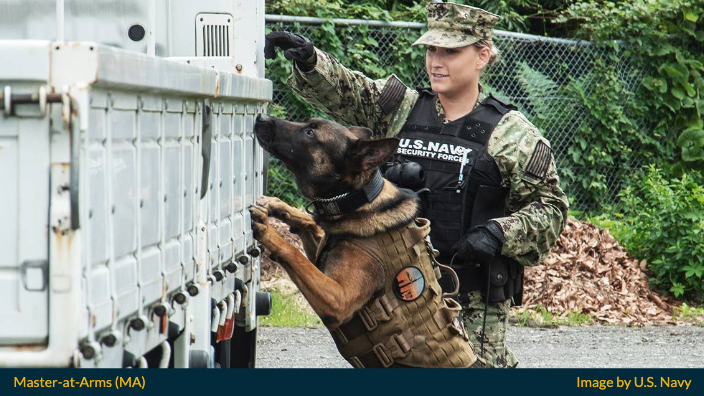
Trained in anti-terrorism tactics, military law, and physical security, Master-at-Arms Sailors serve as the Navy’s law enforcement and security force. They protect naval bases, ships, and personnel around the world.
Why is it cool?
- ✔ Work with K9 teams, counterterrorism duties, and security operations
- ✔ Enforce military law and protect Navy property and people
- ✔ Train in advanced defensive tactics, weapons handling, and basic investigations
After Navy Career Choices
Many former Master-at-Arms use this experience to move into civilian law enforcement and security careers, including local, state, and federal agencies.
9. Hospital Corpsman (Front-Line Medical Hero)
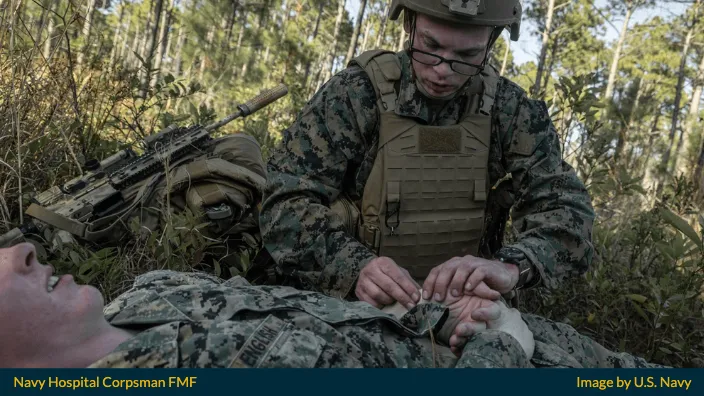
If you want a healthcare job but do not plan to attend medical school, joining the Hospital Corpsmen can be a solid option. Hospital Corpsmen treat injuries, support medical procedures, and respond to emergencies for Sailors and Marines.
They often work in fast-moving settings where clear thinking matters. Many Corpsmen also train for trauma care and field medicine. Those drawn to operational medicine can pursue the Hospital Corpsman ATF Program, an advanced path that includes roles supporting Navy SEAL teams, diving operations, and aviation rescue.
Why is it cool?
- ✔ Support Navy doctors and surgeons in high-pressure environments
- ✔ Serve in naval hospitals, with Marine units, and in deployed locations
- ✔ Build hands-on skills in emergency care and trauma response
After Navy Career Choices
Many former Corpsmen continue in healthcare after service. Common paths include:
- Medical technician roles
- Nursing tracks
- Paramedic and emergency medical services jobs
Civilian employers often value their clinical experience and ability to work under stress.
10. Naval Nuclear Power Sailors (Elite Technical Training & Career Advancement)

People who like science and engineering can get some of the Navy’s most advanced technical training in the Naval Nuclear Power field. The pipeline is demanding. It prepares nuclear-trained Sailors to operate nuclear reactors on aircraft carriers and submarines.
Why is it cool?
- ✔ Learn nuclear energy skills in a field with strong demand
- ✔ Work in high-security settings with modern technology
- ✔ Qualify for major reenlistment incentives when you stay in the community
After Navy Career Choices
Nuclear-trained veterans often move into civilian jobs that value strict procedures and technical depth, including:
- Nuclear power plants
- Aerospace and related engineering roles
- Government energy and national security work
Ready for the Challenge?
The Navy is more than a job. It is a structured lifestyle built on service, training, and teamwork. If you want a challenge, these are some of the coolest Navy careers to explore.
Have Questions?
For role details, requirements, and next steps, contact your local Navy recruiter.
You may also be interested in learning about Do Navy SEAL Officers See Combat? for operational roles, How Many Navy SEALs Are There? for NSW manpower details, and How Much Do Navy SEALs Earn? for SEAL pay and bonuses.