The Oldest Ratings in the U.S. Navy: A Deep Dive into History and Evolution
Since 1775, U.S. Navy ratings have shaped the careers of sailors. These job classifications, adapted from the Royal Navy, were more than labels.
Ratings set day-to-day duties. They also influenced rank structure and how a sailor moved forward in a career. As the Navy changed, the rating system changed with it. Some ratings stayed in place for generations. Others ended. Many shifted to match new missions and new technology.

The Oldest Ratings in the U.S. Navy
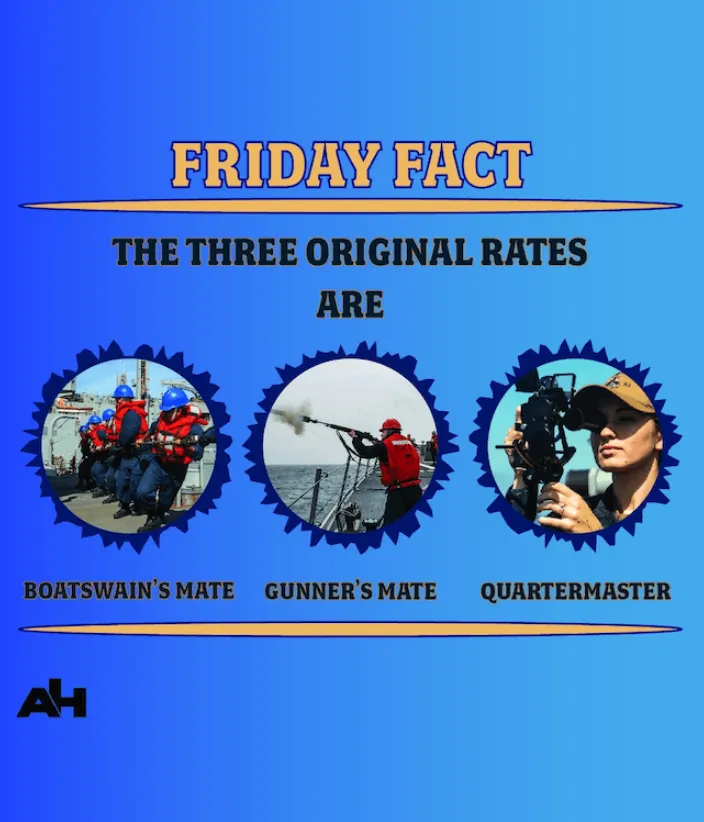
Original U.S. Navy enlisted ratings. Image by All Hands, U.S. Navy.
Three ratings trace their roots to the Royal Navy and still exist in the U.S. Navy today:
- Boatswain’s Mate (BM). Leads deck work, seamanship, and basic navigation support.
- Gunner’s Mate (GM). Handles shipboard weapons, gun systems, and ammunition work.
- Quartermaster (QM). Focuses on navigation tasks and ship control support.
The Yeoman rating became the Navy’s core admin role later. It was not officially created until 1835. Other early jobs also shifted with time and new technology. Ship’s Cook became Culinary Specialist. Ship’s Carpenter changed into Hull Maintenance Technician. These early ratings shaped how the Navy built job training and skill standards.
British Influence on U.S. Navy Ratings
The Continental Navy borrowed heavily from the Royal Navy. The rate system did more than describe rank. It separated trained specialists from Ordinary Seamen.
That split mattered. Early U.S. ships needed people who could navigate, fight the ship, repair gear, and keep supplies moving. British naval practice offered a ready-made structure to meet those needs.
Early Enlisted Ratings and Their Roles
By 1794, the U.S. Navy formally brought back Petty Officer positions. That change expanded enlisted work beyond basic seamanship. Several early ratings became central to ship operations:
- Master’s Mates. Helped officers with navigation tasks and deck routines.
- Coxswains. Ran ship’s boats and managed crew movement.
- Sailmaker’s Mates. Repaired and maintained sails before steam power.
- Gunner’s Mates and Quarter Gunners. Operated and maintained ship weapons.
- Coopers. Built and repaired barrels used for food and water storage.
- Armorer. Maintained small arms and related equipment.
- Stewards. Supported the officer’s mess and handled provisions.
- Master-at-Arms. Enforced order and handled shipboard security.
- Cooks. Prepared meals for the crew.
These ratings served a practical purpose. They kept ships functional at sea and helped crews stay ready for combat. Over time, many of the same job concepts also appeared in other sea services. The Coast Guard later adopted several similar roles for its own missions.
Obsolete Ratings: Loblolly Boys, Coal Heavers & More
As ships and weapons changed, some roles vanished. Many of these jobs made sense for wooden hulls, sail power, and early steam plants.
- Loblolly Boys. Helped ship surgeons with basic care and support. This work later developed into today’s Hospital Corpsmen.
- Jack of the Dust. Managed dry stores, tracked inventory, and protected food supplies.
- Coal Heavers. Shoveled coal to feed steam boilers. It was exhausting work, and ships depended on it.
These ratings no longer exist, but they mattered. They kept crews healthy, fed, and moving.
Modern Ratings and Technology
Navy work shifted as electricity, aviation, missiles, and computers took over. That shift produced new specialties, including:
- Electronics Technician. Maintains shipboard electronics and troubleshooting systems.
- Sonar Technician. Uses sonar gear to find and track submarines.
- Missile Technician. Supports missile handling, maintenance, and system readiness.
- Aviation Electronics Technician. Works on aircraft avionics, sensors, and radar.
- Cyber Warfare Technician. Supports encryption, network security, and cyber defense.
- Chemical Warfare Specialist. Trains crews to operate in chemical, biological, and radiological threats.
- Boiler Technician. Runs and maintains propulsion plant equipment.
Training pipelines also evolved. Schools in places like Great Lakes, Illinois, and Newport, Rhode Island, still prepare sailors for technical work that requires precision and consistent practice.
The Future of Navy Ratings
Automation keeps pushing Navy jobs in new directions. As unmanned systems and AI become more common, the Navy will likely need more specialized skills, such as:
- Robotics Technicians. Maintain and repair autonomous systems.
- AI Systems Specialists. Monitor AI tools used in planning, sensing, and combat support.
- Cybersecurity Experts. Protect networks, data, and mission systems.
- UAS Operators. Control unmanned aerial systems and manage mission payloads.
Automation will not erase ratings. It shifts the work, then new ratings follow.
The Legacy of Navy Ratings
Navy ratings are more than job labels. They link today’s sailors to the people who ran earlier ships under very different conditions. Organizations like the Navy Museum and Naval Institute Press document that history. The Coast Guard also continues to use many of the same skill areas in its own missions.
As the Navy modernizes, the rate structure will keep changing. Ratings will still serve the same basic purpose. They define who does the work that keeps the U.S. Navy operating at sea.
You may also be interested in learning about List of Discontinued Navy Ratings for obsolete job titles, Why Are Navy Engineers Called Snipes? for engineering rating history, and Top 10 Coolest Jobs in the Navy for modern career options.