Navy WESTPAC: Inside the 7th Fleet’s Power, Deployments & Future Warfare
The U.S. Navy operates as the main sea power in the Western Pacific. This area falls under the 7th Fleet. Its reach runs from the International Date Line to Africa’s east coast. It spans both the Pacific and Indian Oceans.
Headquarters: Yokosuka, Japan. Their job: Protect stability in the region, respond quickly to crises, and operate with allied and partner forces.
That work includes disaster relief, joint training events, and sustained control of key sea lanes.

A Floating Fortress
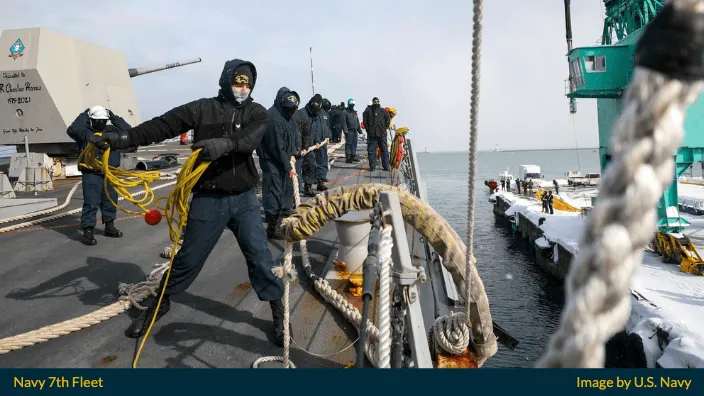
7th Fleet is more than a fleet. It is a large, combat-ready force with a wide set of platforms. Aircraft carriers, destroyers, cruisers, submarines, and unmanned vessels help maintain coverage across the region.
The Department of War relies on the 7th Fleet for anti-submarine warfare and a steady, visible presence in key waters.
Operations also tie into other U.S. forces. The Marine Corps and Air Force plug into planning and execution, along with III Marine Expeditionary Force. That work can include units linked to the 2d Marine Division, 1st Marine Logistics Group, and 2nd Marine Logistics Group.
Together, these forces support a coordinated Indo-Pacific posture and help protect critical sea routes.
Key Deployments & Ports That Matter
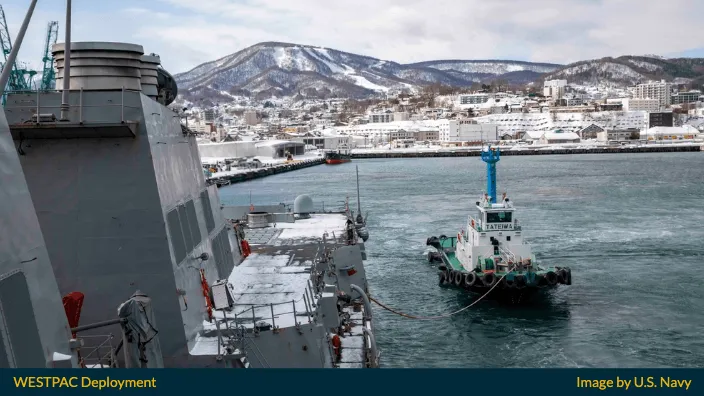
WESTPAC deployments often run for months, and some stretch even longer. Real-world operations show one clear point. Port visits are not just a normal break in the schedule.
These stops keep ships and crews ready. They also strengthen partner ties and support the basics that keep the fleet moving, like fuel, parts, food, and maintenance.
Here are the common ports used during WESTPAC deployments:
- Auckland, New Zealand – Aviation depot services.
- Bahrain – Central Command partner.
- Busan, South Korea – Command service coordination.
- Diego Garcia, BIOT – Key for extended naval operations.
- Dubai, UAE – Deployment plaques and fleet return events.
- Fiji – Squadron ops and regional stability.
- Goa, India – Strengthening command ties.
- Guam, USA – Afloat Training Group Western Pacific.
- Hong Kong – Diplomatic visits, aircraft showcases.
- Karachi, Pakistan – Short-term naval access.
- Manila, Philippines – Legal support hub.
- Mombasa, Kenya – Humanitarian operations.
- Muscat, Oman – Battle group logistics.
- Olongapo City, Philippines – Former U.S. Navy event site.
- Pattaya, Thailand – Liberty stop and command coordination.
- Pearl Harbor, Hawaii – Major command ceremonies.
- Perth, Australia – Deep naval alliance.
- Philippines – Frequent joint training site.
- Singapore – Legal services and fleet resupply.
- Sydney, Australia – Government-contracted ship hub.
- Taiwan – Politically sensitive, strategically critical.
- Yokohama, Japan – Near U.S. naval HQ in Japan.
Beyond logistics, these ports double as intelligence hubs, maintenance sites, and critical supply links.
Unmanned Warfare: The Next Evolution
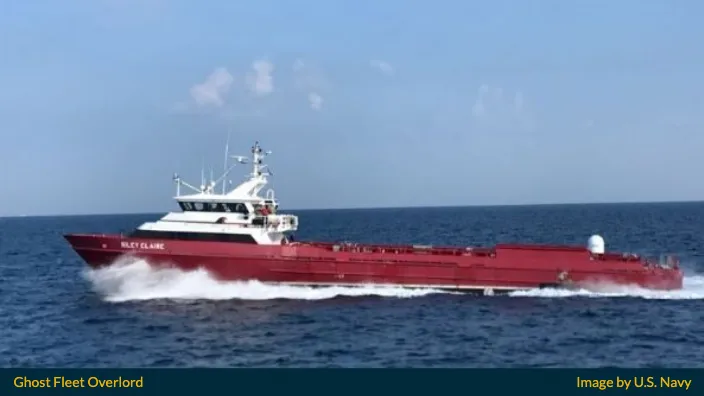
The Navy recently put its Ghost Fleet Overlord project through a demanding operational test. Sea Hunter, Seahawk, Mariner, Ranger, and Nomad took part in Integrated Battle Problem (IBP) 23.2.
Results
- 46,000+ nautical miles traveled, with most miles logged in autonomous mode.
- Operations ran alongside Marine Expeditionary Force and Training Group Western Pacific.
- Events tested AI-enabled flight deck activity and logistics support.
Can Unmanned Ships Handle WestPac?
Current performance shows limits. The Western Pacific is a harsh environment, and the data highlighted several stress points:
- Weather conditions damaged or disrupted systems and affected aircraft operations.
- Crews conducted 13 emergency interventions, mostly tied to environmental strain and system faults.
- The main problem remains keeping vessels mission-capable without hands-on human support, especially during long stretches at sea. See this report.
The Future is Here
The U.S. Navy is reviewing large volumes of data from these runs. The work focuses on fixing weak points, improving autonomy, and tightening how unmanned systems plug into strike group operations. WESTPAC keeps serving as a practical test range, with the 7th Fleet providing the operating space and day-to-day pressure that reveals what works and what breaks.
Autonomy is moving from trials to regular planning, but sustained, independent operations in WestPac still need more reliability.
You may also be interested in reading about Gator Navy: Amphibious Warfare for 7th Fleet amphibious operations, USS Missouri: The Mighty Mo for Pacific Fleet history, and How the Navy Leads Global Humanitarian Aid Efforts for WESTPAC humanitarian missions.