Navy Bluenose: The Arctic Rite of Passage Few Sailors Achieve
“Blue Noses” can sound like frostbite. In the U.S. Navy, it means something else. Sailors earn the title after they cross the Arctic Circle. The crossing checks endurance, seamanship, and the ability to work in freezing seas. This is not a casual trip. It serves as a proving ground.

Where It All Started
The Bluenose tradition traces back more than 400 years. It started long before the U.S. Navy made it an official custom. Sailors who pushed into Arctic waters showed they could handle dangerous weather and hard conditions. Many crews referred to that region as the “Blue Nose Realm.”
This tradition works a lot like the Shellback title for sailors who cross the Equator. The Bluenose version focuses on the Arctic Circle at 66° 32′ North. Over time, the U.S. Navy reinforced the custom through a line-crossing ceremony that recognizes sailors who complete an Arctic crossing.
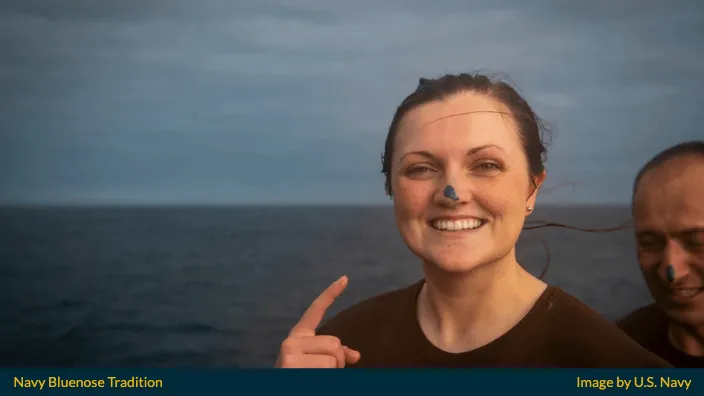
The Blue Nose Ceremony: A Frozen Rite of Passage
Sailors who have not crossed into the Arctic before are called Pollywogs. They do not get a free pass. Before they earn recognition, they complete a set of tough and lighthearted challenges. These tasks check stamina and teamwork in extreme cold.
One key feature is the Royal Court of Boreas Rex. This court mirrors the better-known King Neptune tradition at the Equator, but it uses an Arctic theme.
The court usually includes:
- Boreas Rex. The ruler of the North Wind. This role draws from Greek mythology.
- Aurora. A guardian tied to polar skies and the far North.
- Lord Titan. A figure that nods to Arctic sailing lore.
Sailors must earn the court’s approval before they can take their place in the Order of the Blue Nose.
Earning the Blue Nose Certificate
Sailors who complete the ceremony receive the Blue Nose Certificate. This keepsake often uses Arctic symbols, references Boreas Rex, and lists the exact latitude of the crossing. Some sailors also wear Bluenose Trident-themed gear to show they completed the rite.
Why Bluenoses Are Rare
Not every sailor gets a chance to cross into Arctic waters. Northern missions are limited. A crossing also depends on leadership support, including a willing Command Master Chief, to take a ship past the Circle.

Forward-Deployed Naval Forces-Europe sailors, especially those based in San Diego, often have a strong chance to earn the title. Some ships also have better odds of heading north.
Certain ships have a better chance of getting Arctic tasking:
- Arleigh Burke-Class Guided-Missile Destroyers. These ships often support cold-weather operations.
- Ohio-Class Submarines. Some missions include patrols under Arctic ice.
- U.S. Sixth Fleet. Some deployments reach northern waters.
For surface ships, a well-timed mission near Norway can put a crew in range of the Arctic Circle. The same goes for a Russian submarine tracking task, depending on where the operation takes place.
The Tradition Evolves
The Bluenose ceremony has shifted over time. Earlier versions ran harsher. Today’s events aim to maintain tradition while protecting safety and morale.
The biggest change: Boreas Rex now fills the role that King Neptune holds in the Equator ceremony. The point stays the same. A crew proves it can operate in the Arctic’s punishing conditions.
Santa is a Bluenose?
Navy folklore adds a playful angle. Some sailors say Santa and his elves belong to the Order of the Blue Nose by birth. Others joke that Santa carries a trident, similar to the King Neptune theme used during Equator crossings.
More Than Just a Title
Being a Bluenose is not just about crossing a line on a chart. It signals that a sailor can endure, adapt, and perform in harsh conditions. The experience builds shared pride across crews and across time.
Sailors who earn it do not only keep a certificate. Many treat it like a badge they carry with them.