Key Differences between Navy Pilots and Air Force Pilots
When you purchase through links on our site, we may receive compensation at no extra cost to you.
Navy pilots and Air Force pilots both fly military aircraft and support national defense. The biggest differences come from where they operate and what their service is built to do.
Navy aviation supports ships at sea and expeditionary operations. That includes carrier operations, long overwater missions, and tight integration with the fleet. Air Force aviation is built around land-based airpower, with large-scale operations from fixed bases around the world.
If you are deciding between the two, focus on the training style, the mission sets, and the lifestyle that matches your goals.

Training and Education Requirements for Navy Pilots
To become a U.S. Navy pilot, you must first become a commissioned officer. Most applicants earn a bachelor’s degree before commissioning through routes like the Naval Academy, NROTC, or Officer Candidate School.
After commissioning, Navy and Marine Corps flight training is run through Naval Aviation training commands. A common early step is Aviation Preflight Indoctrination (API) at the Naval Aviation Schools Command in Pensacola, Florida.

From there, students move through primary flight training and then track into a pipeline based on performance, preferences, and service needs. Navy pilots can end up flying aircraft from carriers, ships, or shore bases, depending on community and assignment.
Key things to know about the Navy pipeline:
- The Navy trains for overwater flying and maritime operations early.
- Carrier aviation requires specialized training for catapult launches and arrested landings.
- Navy aviation includes fixed-wing, rotorcraft, and maritime patrol communities.
Training and Education Requirements for Air Force Pilots
Air Force pilots also start by becoming commissioned officers, typically with a bachelor’s degree. Many commission through the Air Force Academy, ROTC, or Officer Training School.
After commissioning, pilot candidates must meet medical standards and compete for a training slot. They also take the Air Force Officer Qualifying Test (AFOQT) and other assessments used in pilot selection.
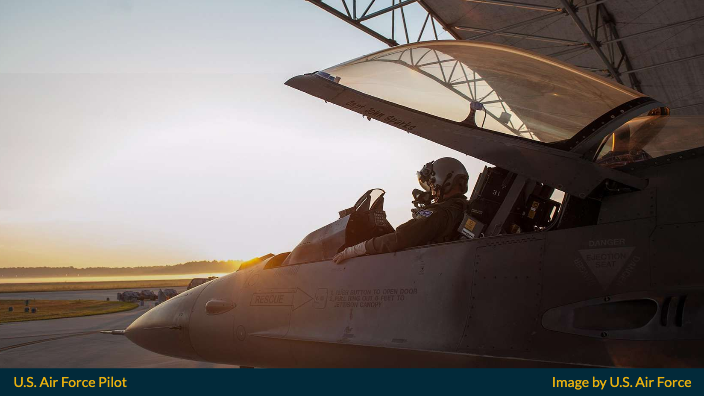
Air Force flight training is designed around large-scale operations from land bases. Students learn foundational flight skills, then move into tracks that prepare them for fighters, bombers, mobility aircraft, special operations, or other missions based on performance and service needs.
Key things to know about the Air Force pipeline:
- Training is built around land-based flying and global reach.
- Many career fields emphasize long-range planning, large formations, and joint integration.
- The Air Force flies a wide range of aircraft, including fighters, bombers, tankers, airlift, and ISR platforms.
Differences in Aircraft and Missions
Both services fly advanced aircraft, but they are organized around different core missions.
Navy pilots often focus on:
- Carrier-based strike and air defense
- Maritime strike and sea control support
- Anti-submarine warfare and maritime patrol
- Ship-based helicopter missions such as logistics, search and rescue, and surface warfare support
Air Force pilots often focus on:
- Air superiority and air interdiction
- Close air support and support to ground forces
- Strategic strike and long-range deterrence missions
- Air mobility missions like airlift and aerial refueling
- Intelligence, surveillance, and reconnaissance (ISR)
There is also overlap. Both services fly fighters, train to operate in contested environments, and regularly support joint combat operations.
Career Paths and Opportunities for Navy Pilots
Navy pilots typically serve in squadrons assigned to carrier air wings, expeditionary units, or shore-based commands. Many rotate between sea tours and shore tours, with instructors and staff roles in between.
Depending on aircraft community, a Navy pilot may:
- Deploy on a carrier strike group
- Deploy with a detachment from a shore base
- Support fleet operations from a naval air station
- Move into instructor, test, tactics, or staff billets later in a career
Navy pilots can also compete for specialized roles such as test pilot programs and tactics instructor assignments, depending on performance and timing.
Career Paths and Opportunities for Air Force Pilots
Air Force pilots typically serve at major air bases and may deploy as part of expeditionary packages, rotational deployments, or long-term overseas assignments.
Depending on aircraft and mission, an Air Force pilot may:
- Deploy from a land base to support combat operations
- Fly global mobility missions that operate across multiple regions
- Move into instructor, evaluator, weapons, test, or staff roles later in a career
The Air Force also has multiple career tracks tied to mobility, bomber, fighter, ISR, and special operations communities, each with different lifestyles and deployment patterns.
Lifestyle and Deployment Differences
Lifestyle varies more by aircraft and unit than by service, but there are common patterns.
Navy pilots are more likely to:
- Spend time at sea on carriers or amphibious ships
- Operate from moving bases with tighter space and different living conditions
- Plan around carrier workups, sea trials, and deployment cycles
Air Force pilots are more likely to:
- Operate from established air bases with larger support infrastructure
- Deploy to forward bases for set rotations
- Have more stability in day-to-day living conditions, depending on mission and unit tempo
Both services deploy. Both have high training demands. The main difference is whether your baseline operating environment is built around ships at sea or fixed bases on land.
Differences in Roles and Responsibilities
Both Navy and Air Force pilots are officers, so leadership and accountability are part of the job. Beyond flying, pilots often manage training programs, safety, maintenance coordination, and mission planning within a squadron.
Navy pilots commonly have additional responsibilities tied to maritime operations, such as integrating with shipboard teams and working within carrier air wing structures. Air Force pilots often work within large wing organizations and may integrate closely with ground units and joint task forces.
In both services, your role expands with rank. You move from learning the mission, to leading small teams, to managing larger programs and operations.
Collaboration and Joint Operations
Modern operations are joint by default. Navy and Air Force pilots regularly train and operate together in exercises and real-world missions.
Joint operations can include shared airspace control, combined strike packages, and integrated planning with space, cyber, and intelligence assets. You can read a background overview on joint doctrine and concepts here: joint operations.
Choosing the Right Path
Choosing between Navy and Air Force aviation comes down to fit. Both pipelines are competitive, and both lead to high-responsibility careers.
If you want a carrier-based flying culture and maritime operations, the Navy may be a better match. If you want land-based airpower and global reach from major air bases, the Air Force may fit better.
For current eligibility requirements and selection details, speak with a local Officer Recruiter.
You may also be interested in learning about Is Top Gun Real? for naval aviation training, Can Navy Pilots Wear Glasses? for vision requirements, and What Navy Officer Jobs Are In Demand? for career options including aviation.