Is Navy OCS Hard?
Yes. Navy Officer Candidate School (OCS) is designed to be hard. It trains future officers while also screening for fitness, discipline, and leadership under stress.
OCS is not difficult in one single way. It is a mix of physical training, strict standards, academics, inspections, time pressure, and constant evaluation. Candidates who prepare early usually handle the pace better.
This guide explains what OCS is, who can apply, what training looks like, and how to prepare for the most common challenges.

Navy Officer Candidate School
What Is Navy OCS?
Navy OCS is the commissioning program for many college graduates who want to become Navy officers. It is conducted at Officer Training Command Newport in Rhode Island.
OCS is currently about 13 weeks long, but schedules and requirements can change. Use this site guide as a starting point, then confirm details with your recruiter and official Navy sources. For a full overview, see the Officer Candidate School (OCS) guide.
Who Can Apply?
OCS applicants must meet requirements for a specific officer program (designator). Requirements vary by program, but common expectations include:
- U.S. citizenship (most commissioned officer programs require it)
- A bachelor’s degree from an accredited school
- Medical qualification for military service and for the officer community you are applying to
- A background screening suitable for service and, in many cases, a security clearance
- Fitness and body composition standards
An officer recruiter can help you confirm what applies to your situation. If you need one, use the Navy recruiter locator.
What to Expect in Training
OCS training includes:
- Physical training and fitness assessments
- Military drill, customs, and bearing
- Inspections and strict daily standards
- Classroom instruction and testing
- Leadership events where you are evaluated under pressure
- Teamwork in a controlled, high-stress environment
Most candidates find the pace challenging. You have to keep up with multiple requirements at once, even when you are tired or frustrated.
The End Goal
Graduate OCS and you earn a commission as a Navy officer. Most graduates start as Ensigns (O-1), then move to follow-on training and their first operational assignment. Many begin their careers as division officers within their community.
Minimum Requirements for Navy OCS
Qualifications
Requirements change by designator and by Navy policy. In general, OCS applicants should expect requirements in these areas:
- Age: Age limits vary by officer program. Some communities accept applicants into their 30s, and others may allow older applicants.
- Citizenship: Commissioned officer programs generally require U.S. citizenship.
- Education: A bachelor’s degree is required. A competitive GPA helps, and some communities have specific academic preferences or prerequisites.
- Medical standards: Candidates must meet Navy medical standards. Aviation and some other communities have additional medical requirements.
- Background screening: The Navy screens applicants for suitability. Many officer roles require eligibility for a security clearance.
- Fitness and body composition: Candidates must meet Navy standards and complete the required fitness assessment events.
Physical Fitness Requirements
OCS is not a fitness program that gets you in shape from scratch. It assumes you arrive ready to train.
At Officer Training Command Newport, candidates complete the Navy Physical Fitness Assessment process, which includes a body composition assessment and physical performance events.
What’s on the Test?
The fitness assessment includes:
- Push-ups
- Plank
- A cardio event (often the 1.5-mile run)
Cardio options and rules can change, so confirm current requirements before you ship.
Body Composition Assessment (BCA)
Candidates must meet Navy body composition standards. This screening helps confirm that you are within required body fat standards for service.
Physical Training at OCS
Physical training at OCS commonly includes:
- Running and interval training
- Calisthenics (push-ups, planks, and other bodyweight work)
- Team workouts and conditioning
Why It Matters
Fitness affects everything at OCS. It impacts your performance, recovery, confidence, and ability to lead. It also reduces the risk of injuries that can delay training.
Application Process for Navy OCS
The Process
The Navy OCS application process is paperwork-heavy and competitive. Most applicants work through an officer recruiter and build an application package for a selection board.
The exact steps vary by program, but the process often includes:
- Selecting an officer program and eligibility screening
- Required testing (program-dependent)
- Medical processing and documentation
- Building an application package and submitting it to a board
- Selection decision and, if selected, a class date and shipping instructions
Is It Worth It?
For many people, OCS is worth it because it leads to a commission, higher responsibility, and a clear leadership track. It can also open doors to specialized training and long-term career options.
If pay is part of your planning, review: U.S. Navy officer salary.
Basic Steps to apply for Navy OCS
- Talk with an officer recruiter and confirm which designator fits your goals.
- Gather documents, transcripts, and references early.
- Prepare for any required tests for your program.
- Complete medical processing and follow up on any required waivers or consults.
- Submit your package and wait for board results.
Tips for a successful application
- Show consistent leadership, not just a title. Include measurable responsibilities and results.
- Take fitness seriously before you apply. Strong fitness supports a stronger OCS performance.
- Do not rush the paperwork. Missing items delay packages.
- Prepare for interviews by explaining why you want to serve and what community you are applying to.
Is Navy Officer Candidate School Hard?
What Makes It Tough?
OCS is hard because it combines multiple stressors:
- Physical training while you are adjusting to a strict environment
- Limited time and constant deadlines
- Frequent inspections and high attention to detail
- Academics and exams
- Leadership pressure and evaluation
Candidates who struggle most often arrive underprepared for fitness, time management, or attention to detail.
The Path Forward
The best way to make OCS more manageable is to prepare early and be consistent. Build a base level of fitness, tighten up your daily habits, and learn basic Navy terminology before you arrive.
If you want an overview of the pipeline and what happens after graduation, see Navy OCS graduation: what to expect.
Officer Candidate School Curriculum
What You’ll Learn
OCS covers topics that help you function as a junior officer, including:
- Military customs, standards, and administrative basics
- Leadership and ethical decision-making
- Naval operations fundamentals and shipboard life basics
- Damage control concepts and practical skills
The Three Phases of OCS
OCS is commonly described in three phases. Names and exact timing can vary, but the structure is similar.
1. Indoctrination Phase
This phase focuses on adapting to military standards and the pace of training. Candidates learn basic expectations, routines, and discipline.
2. Development Phase
This phase builds professional knowledge and leadership performance. Candidates are evaluated through academics, practical events, and leadership roles.
3. Commissioning Phase
This final phase focuses on preparing candidates to transition to the fleet as officers. Training continues while leadership expectations increase.
Leadership Principles Taught in Navy OCS
OCS emphasizes leadership built around Navy standards and accountability. Candidates are expected to lead by example and improve their performance quickly.
Core Leadership Principles
Common leadership expectations include:
- Know the standard and enforce it fairly
- Communicate clearly and early
- Stay calm under pressure
- Take responsibility for decisions and outcomes
- Support the team while still holding people accountable
Damage Control Training
Damage control training is a major part of Navy culture because ships operate far from immediate outside help. Junior officers are expected to understand the basics and to lead in emergencies.
What You’ll Learn
Damage control training commonly includes:
- Firefighting fundamentals and procedures
- Flooding response basics
- Repair and containment concepts
- Team coordination under stress
It’s No Joke
These events are physically demanding and require focus. Candidates learn to follow procedures, communicate clearly, and keep moving even when tired.
Mental Toughness Training in Navy OCS
OCS challenges mental toughness through constant evaluation, strict standards, and pressure to perform. The goal is not to break people. The goal is to develop discipline and reliability under stress.
What It Teaches
- Stay focused under pressure
- Learn quickly from mistakes
- Keep a professional attitude in difficult conditions
How They Push You
- Tight timelines and competing requirements
- Leadership roles with real consequences for the team
- Events that combine fatigue, problem-solving, and attention to detail
Why It Matters
Officers are expected to make decisions when conditions are not ideal. OCS screens for people who can stay steady and keep the team moving.
Strategies to Develop Mental Toughness During Training
- Train consistently: Regular training builds confidence and reduces stress.
- Control your basics: Hydration, sleep routines, and organization matter.
- Stay coachable: Accept feedback, fix the issue, and move on.
- Use simple routines: A checklist mindset helps when you are tired.
- Practice under pressure: Timed workouts and study sessions build focus.
Physical Conditioning in Navy OCS
Physical conditioning is part of daily life at OCS. Arriving in shape helps you recover faster and perform better.
How to Prepare for OCS
Build a base before you ship:
- Run 3 to 4 times per week, including one longer run and one interval day
- Practice push-ups and planks multiple times per week
- Add strength training for injury prevention (legs, hips, back, core)
- Include mobility work for ankles, hips, and shoulders
- If you are not a confident swimmer, train for swim comfort and basic endurance
The Navy Physical Fitness Assessment (PFA)
The PFA includes body composition plus physical performance events. Passing matters, but scoring above the minimum helps you handle the overall pace of training.
Why It Matters
Fitness supports your credibility as a leader. It also reduces the risk of injuries that can delay training.
Physical Fitness Standards for Officer Candidates
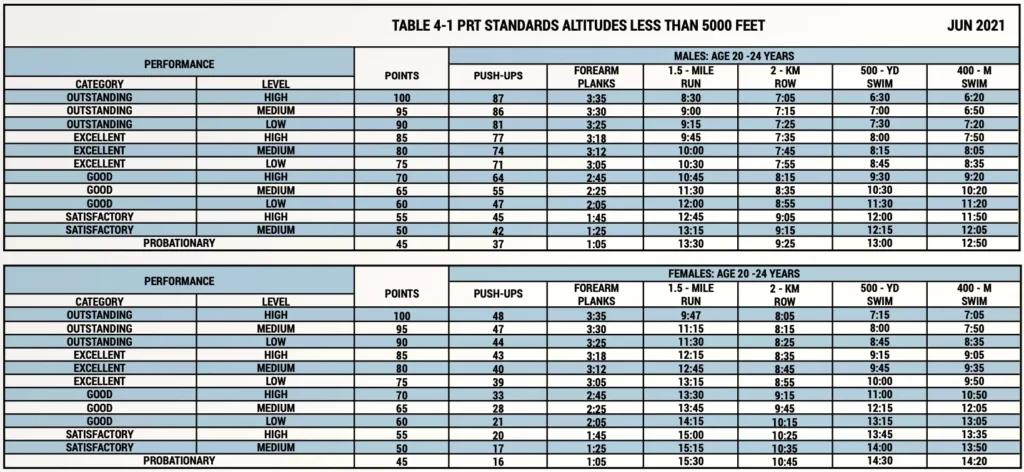
Fitness standards depend on age and sex, and they can change based on Navy policy. Use official tables when you are preparing, and aim above the minimum.
Minimum PFA Requirements
At a minimum, you should be able to:
- Meet body composition standards
- Pass the required push-up, plank, and cardio event for your age group
Why It Matters
Arriving barely able to pass often leads to struggle. Arriving comfortably above the minimum gives you more room to manage the other demands of OCS.
PRT Standards
Do You Have What It Takes?
Navy OCS is difficult because it is meant to prepare you to lead. Candidates are evaluated on fitness, discipline, learning, and leadership under pressure.
If you want to improve your odds, prepare early. Build your fitness base, organize your paperwork, and learn the basics before you ship. If you do that work up front, you give yourself a better chance to focus on performance once training starts.
You may also be interested in learning about Navy OCS Graduation: What to Expect for the ceremony after completion, Common Disqualifiers for Navy Officer Candidates for screening standards, and Do Naval Officers Go to Boot Camp? for officer training paths.