The ‘Devil Docs’ of the U.S. Navy: Battlefield Healers, Combat Brothers
The U.S. Marine Corps has a few well-known nicknames, including Leatherneck, Jarhead, and Devil Dog. Another name carries the same weight: Devil Doc. Marines do not hold that title.
For more than a century, Navy Hospital Corpsmen have served with the Fleet Marine Force (FMF). They fight, take risks, and save lives beside Marines. Many Marines see them as more than medics. They operate like combat partners.
The Devil Doc label is not automatic. FMF Corpsmen earn it over time. Most earn it during hard field conditions, when lives depend on calm decisions and fast action.

Where It Started: Belleau Wood
June 1918. The Battle of Belleau Wood helped build the Marine Corps image as relentless fighters. Around this time, German forces reportedly used the nickname Devil Dogs (Teufel Hunden) to describe Marines who would not break.
Marines were not the only ones in the fight. Lt. Joel Boone, Lt. Orlando Petty, and Lt. (j.g.) Weedon Osborne served as Fleet Marine Force medical officers. They moved into machine-gun fire and gas attacks to pull wounded Marines out of danger and treat them. Some did not return. Others kept working after burns, blasts, and exposure, because the wounded still needed care.
Enlisted Sailors also proved themselves. Many Hospital Corpsmen treated casualties under fire. Some died while doing it.
Pharmacist’s Mate Third Class Joseph Johnson
Serving with the 5th Marines, Joseph Johnson ran through waist-high wheatfields under machine-gun fire. He treated and evacuated more than 200 wounded men. He did this without safe aid stations and with little cover. His actions earned the Navy Cross.
Chief Pharmacist’s Mate George G. Strott
On June 6, serving with the 6th Marines, George Strott left cover to pull wounded men out of an artillery barrage. Darkness covered most of the field. Shell bursts lit up the ground in flashes. He carried Marines over cratered terrain and through barbed wire to a dressing station. He kept moving until every wounded Marine had a chance to live. He also received the Navy Cross.
Dressing Stations in Hell
There were no hospitals nearby. There were no real medical facilities. Corpsmen built dressing stations wherever they could find space, including wine cellars, farmhouses, and damaged trenches.
Lt. Boone and his team worked out of a farmhouse near the fighting. They controlled heavy bleeding. They performed emergency amputations. They treated infections by candlelight.
Modern supplies were not available. Antibiotics were not an option. Plasma was not available. Many Corpsmen relied on morphine syrettes when supplies allowed.
Cold made everything worse. Corpsmen tried to slow shock and exposure. They wrapped wounded Marines in blankets. They used canned heat to keep bodies warm through the night.
German shelling also targeted these stations. One direct hit killed ten wounded Marines at once. Another station at Lucy-le-Bocage took such heavy fire that Lt. Orlando Petty was knocked unconscious. His gas mask was destroyed. He kept treating Marines anyway, even while breathing mustard gas. That exposure caused lasting lung damage.
By the end of the battle, 616 Marines were killed in action. Another 332 later died from their wounds. More than 2,400 were injured, and about 900 suffered gas attacks. Many survived because Corpsmen refused to abandon them.
Why They’re Called ‘Devil Docs’
Marines earned the name Devil Dog at Belleau Wood. Corpsmen earned Devil Doc by showing they would fight, bleed, and die beside Marines.
They did not work safely in the rear. Many moved into open fire to reach the wounded. They dragged Marines out of mud and shell holes. They used their own bodies as cover. They treated injuries while bullets and shrapnel kept coming.
By World War II and battles like Iwo Jima, Marines knew what this meant in practice. Corpsmen were not only medics. They trained to handle weapons. They returned fire when needed. They defended patients when the situation collapsed.
The title works like an earned label, not an official rank. A Corpsman cannot claim it alone. Marines apply it when a Corpsman proves, over time, that he will not leave them behind.
That idea still holds today. A combat-tested Corpsman who earns a unit’s trust may be known as a Devil Doc. No ribbon or certificate can grant it. Marines give it based on what they saw and what they survived.
A Legacy in Blood: The Devil Docs Today
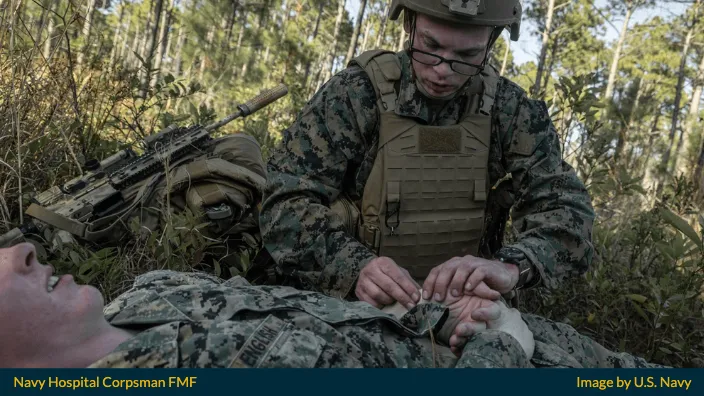
The bond between Marines and Corpsmen did not end at Belleau Wood. It kept getting stronger.
From Iwo Jima to Fallujah, and from Vietnam to Afghanistan, Corpsmen have fought and taken casualties beside Marines. Over time, they have earned more combat awards than any other Navy rating.
The numbers say it all:
- 22 Medal of Honor recipients (about half of all Navy and Marine Corps recipients)
- 174 Navy Crosses
- 31 Distinguished Service Medals
- 946 Silver Stars
- 1,582 Bronze Stars
- 14 U.S. Navy ships named after Corpsmen
Devil Docs still train for combat today. Many go through demanding courses at Field Medical Training Battalions (FMTB) to prepare for the realities of war.
Earning the Title: Two Brutal Paths
Devil Doc is not a casual nickname. Marines use it for Corpsmen who prove themselves. In practice, there are two hard paths to earning it:
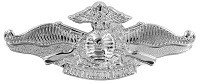
The Fleet Marine Force (FMF) Pin
Passing the FMF qualification process means mastering Marine Corps history, weapons, and battlefield medicine. But some old-school Corpsmen say it lost its weight when it became mandatory.
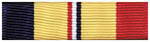
The Combat Action Ribbon (CAR)
For many Corpsmen, this is the clearest proof point. They deploy with Marines. They face direct enemy action. They earn the Combat Action Ribbon.
The ribbon alone does not make a Devil Doc. What matters is what the award signals. It shows a Corpsman operated under fire and stayed with the unit. It also shows Marines trusted that Corpsman when everything went bad.
Marines & Corpsmen: A Brotherhood Forged in Blood
This relationship stands out in the U.S. military. Medical care is part of it, but trust drives it.
When a Marine goes down, he often calls for Doc, not “medic.” That word carries meaning inside Marine units. It implies speed, calm, and loyalty under pressure. Marines expect their Corpsman to move toward danger, not away from it.
The Devil Doc title follows the same logic. It comes from experience, not from a self-chosen label. Corpsmen earn it by showing up, staying in the fight, and keeping Marines alive.
When Marines and Corpsmen fight side by side, the gap between roles gets smaller. In that moment, a Devil Dog and a Devil Doc operate as one team.
You may also be interested in learning about What Do Navy SEAL Corpsmen Do? for the special operations medical role Corpsmen fill alongside SEALs, Navy Hospital Corpsman ATF Program for the advanced training pipeline and career paths, and Top 10 Coolest Jobs in the Navy where Hospital Corpsman ranks among top careers.