Navy SWO vs. Supply Corps: Which Officer Path is Right for You?
Embarking on a career as a commissioned officer in the U.S. Navy is an important choice that will lead to years of service, leadership, and personal growth. Many people face a key decision when choosing between two paths:
- Becoming a Surface Warfare Officer, who focuses on combat and ship operations
- Becoming a Supply Corps Officer, who supports the Navy by managing supplies and logistics
This decision affects your daily work, future career options, and the skills you will build in the Navy and beyond.
This article explains what SWOs and Supply Corps Officers do, including their:
- Missions
- Responsibilities
- Training
- Career opportunities
This information will help you choose the path that fits your goals and abilities. Understanding these roles is very important, especially as the Navy works to meet its officer recruitment goals.
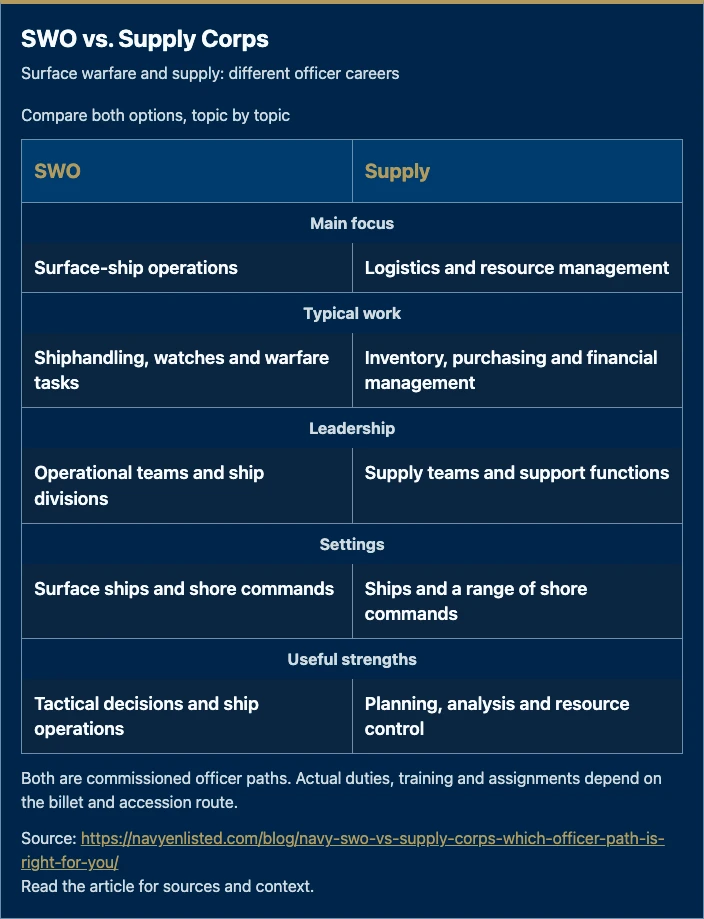
| SWO | Supply |
|---|---|
| Main focus | |
| Surface-ship operations | Logistics and resource management |
| Typical work | |
| Shiphandling, watches and warfare tasks | Inventory, purchasing and financial management |
| Leadership | |
| Operational teams and ship divisions | Supply teams and support functions |
| Settings | |
| Surface ships and shore commands | Ships and a range of shore commands |
| Useful strengths | |
| Tactical decisions and ship operations | Planning, analysis and resource control |
Both are commissioned officer paths. Actual duties, training and assignments depend on the billet and accession route.
Source: https://navyenlisted.com/blog/navy-swo-vs-supply-corps-which-officer-path-is-right-for-you/
Read the article for sources and context.
The Critical Choice: Understanding Officer Paths
The U.S. Navy is a large group made up of many different officer communities. Each community has its own special job and way of working. These include areas like flying planes, operating submarines, gathering intelligence, working with codes, and handling nuclear systems.
Two well-known and easier ways to become a leader on Navy ships are through the Surface Warfare Officerand Supply Corps Officer communities. Both of these jobs need hard work, good leadership skills, and a strong desire to serve. However, the daily work, where they do their jobs, and the skills they learn are very different.
Knowing these differences is important when you want to choose your career in the Navy.
Why This Decision Matters for Your Naval Career
The core distinction: SWOs are in charge of ships and lead the actions during missions, like steering a ship or directing a team in battle. Supply Corps Officers take care of the supplies, money, and support needed to keep those missions running smoothly. For example, while a SWO might plan a ship’s route, a Supply Corps Officer makes sure the ship has enough fuel and food.
The selection of your first officer community greatly affects what your early career will be like, how you grow professionally, and the base for your entire naval career.
A SWO commission puts you right in the middle of naval operations, where you must make quick command and tactical decisions. On the other hand, a Supply Corps commission makes you a key part of the Navy’s logistics, helping to keep everything running smoothly so the Navy can perform its missions.
This choice changes several important aspects of your career, including:
- How close you are to combat
- Whether you work more with engineering or management
- The kinds of places you work
- The leadership challenges you will face
Picking the right option early on can help you:
- Enjoy your job more
- Grow faster in your career
- Have a better experience in the Navy
Understanding the Surface Warfare Officer (SWO) Role
A Surface Warfare Officer (SWO) is a naval officer who works on Navy ships. They are in charge of making sure the ship is ready for action and runs smoothly. They lead the crew and manage the ship during different missions.
The Mission: Leading and Fighting on the High Seas
The main job of a SWO is to lead their crew to complete the Navy’s missions on the water. This can involve commanding the ship and its crew during tasks like:
- Showing power
- Protecting sea areas
- Helping in disasters
- Fighting in battles
SWOs handle the day-to-day work to keep the ship safe and ready for whatever mission comes next.
Core Responsibilities and Daily Life of a SWO
SWOs have many important tasks. When they start, they usually lead small groups on the ship, such as teams responsible for:
- Navigation
- Weapons
- Engineering
- Operations
They watch over their teams, train them, and keep their part of the ship ready. SWOs spend a lot of time on watch, which means working on the ship’s bridge or control centers and making decisions that affect the ship immediately. They also take part in daily drills, maintenance, and planning while on the ship.
Key Platforms and Environments for SWOs
SWOs serve on different types of Navy ships, including:
- Destroyers
- Cruisers
- Littoral combat ships
- Amphibious assault ships
- Aircraft carriers
Their work mainly happens at sea, often far from home for long periods. SWOs participate in exercises and real missions around the world, requiring them to be flexible and strong.
SWO Leadership: Direct Command and Operational Authority
SWO leadership involves being in charge and making important decisions. Key leadership duties include:
- Ensuring the crew’s safety and performance during tough situations
- Leading bigger groups as they gain experience
- Possibly commanding entire ships in higher roles
This career path helps SWOs improve their leadership skills and gain deep knowledge of Navy operations. Since their job mixes engineering and operational work, SWOs must understand both areas well.
Understanding the Supply Corps Officer Role
The Supply Corps Officer plays a very important role in the Navy by making sure sailors have everything they need to do their jobs well. They are experts in handling supplies, managing money, and keeping things ready for action. Whether on ships or on land, they help the Navy work smoothly.
The Mission: The Backbone of Naval Logistics and Readiness
The Supply Corps’ mission is to provide important support with supplies, money, and logistics that keep Navy operations running all over the world. They make sure ships, planes, and bases have the parts, fuel, food, services, and money required to stay ready.
For example, the Naval Supply Systems Command (NAVSUP) leads projects like the Naval Sustainment System-Supply to make supply chains better, so readiness improves and costs go down.
Core Responsibilities and Daily Life of a Supply Corps Officer
A Supply Corps officer has many different jobs that can change depending on where they work. Their main tasks include:
- Managing stocks
- Buying supplies
- Making contracts
- Handling money
- Managing food services
- Taking care of people in their command
Some days they might oversee a warehouse, make deals with suppliers, handle budgets, or make sure supplies reach ships on missions.
Diverse Environments: From Ship to Shore
Supply Corps officers work in many different places. They can be found on all types of Navy ships like:
- Aircraft carriers
- Destroyers
- Submarines
Here, they take care of important supplies.
They also work on land at:
- Supply centers
- Naval air stations
- Special support units
This gives them experience in many parts of Navy operations.
Supply Corps Leadership: Strategic Management and Resource Optimization
Leaders in the Supply Corps focus on:
- Planning and using resources wisely
- Predicting future needs
- Managing complicated supply lines
- Deciding how to share resources to support long-term goals
They lead teams of sailors and civilians, helping them improve skills in logistics, money management, and leadership. This prepares them to handle big operations and budgets.
The Path to Becoming an Officer: Entry and Initial Training
If you want to become a naval officer, like a Surface Warfare Officer or a Supply Corps officer, there are clear steps to follow. These steps include being chosen through a careful selection process and going through training programs that teach you what you need to know.
Common Entry Programs for Both Paths
There are a few main ways to start if you want to be an officer in the U.S. Navy:
- Naval Reserve Officers Training Corps (NROTC) scholarship program: This is for college students. After they finish school, they become officers called ensigns.
- Officer Candidate School (OCS) in Newport, Rhode Island: This is a 12-week training program for people who graduated from college but did not do ROTC.
- Direct commissioning programs: Available for people who have special degrees or skills.
Specialized Training for Each Community
After becoming an officer, you will get special training for your job:
Surface Warfare Officers:
- Attend the Surface Warfare Officer School (SWOS) in Newport, Rhode Island.
- Learn how to operate ships, navigate, understand naval tactics, and lead others.
- This training prepares them for their first job on a Navy ship.
Supply Corps Officers:
- Receive training focused on naval logistics, managing supply chains, financial management, contracting, and leadership.
- This training helps them handle the Navy’s complicated supply and support needs effectively.
A Day in the Life: Operational Realities and Work Environment
The daily tasks of SWOs and Supply Corps officers are different because they have different jobs and work in different places.
The SWO Experience: High Stakes and Direct Command
A junior SWO usually spends their day:
- Watching over the ship
- Doing jobs in their division
- Training
They might work on a destroyer or an aircraft carrier, where things move quickly and the work is hard. Their job includes watching over the ship’s systems and keeping the crew safe, which can be very stressful. Many sailors feel strong stress, and junior officers often feel this too. The job is rewarding because their decisions affect the ship and crew right away.
The Supply Corps Experience: Dynamic Management and Problem Solving
A Supply Corps officer’s day usually involves:
- Managing supplies
- Solving problems
On a ship, they might:
- Order parts
- Run the ship’s store
- Manage pay
On land, they might work with:
- Big inventories
- Contracts
- Money matters
This job is often done in an office, but on ships, the hours can still be long. Supply officers make sure the right supplies arrive on time to keep ships ready. On submarines, they also handle inventory and crew needs. Some officers on submarines are called “CHOPs,” a Navy nickname for certain roles on the boat.
Career Progression and Advanced Opportunities
Both the SWO and Supply Corps offer clear career paths with many chances to learn more and become experts in different areas.
SWO Career Path: Command at Sea and Specialized Roles
In the SWO path, officers work towards leading a ship. They start by learning different jobs on the ship and take on more duties over time. Later, they can lead whole departments or even command their own ship.
SWOs can also focus on special areas such as:
- Stopping terrorism
- Protecting the ship
- Studying operations
Some SWOs move to other roles like:
- Staff teams
- Intelligence positions
- Managing purchases
They use their experience in bigger, important roles.
Supply Corps Career Path: Strategic Leadership and Global Logistics
Supply Corps officers hold important leadership and logistics jobs worldwide. They manage supplies, money, and procurement. These officers gain experience both on ships and on land.
Typical responsibilities include:
- Leading teams
- Managing large budgets
- Operating in complex international environments
Advanced roles involve:
- Managing contracts
- Supporting fleet readiness
- Leading in major naval commands such as the Naval Supply Systems Command
The skills gained in this career are also valuable for civilian jobs.
Opportunities for Advanced Education for Both Communities
Both SWOs and Supply Corps officers have access to prestigious educational programs, including:
- Naval Postgraduate School (NPS): Offers master’s degrees in technical, management, and operations fields
- Navy War College: Provides education in national security strategy and leadership
Attending these schools often leads to:
- Specialized assignments
- Significant career advancement within their communities
Strategic Pros and Cons: Weighing Your Options
Choosing between the SWO and Supply Corps paths means looking at the good and bad sides of each job.
Advantages of a SWO Career
A SWO career gives you the chance to be the boss at sea and lead Sailors in important missions. You get to be part of the Navy’s mission to protect the country, and you often work on ships, which can help you move up to being a ship’s commander faster. You also learn a lot about how ships work and how to solve problems as a leader.
Challenges of a SWO Career
SWO jobs can be hard because you have to work a lot of long trips away from home, which can be tough on your personal life. The job is stressful because you have to make quick decisions that affect the mission and the people around you. Some officers feel very tired from the busy work schedule and wish they had chosen another job like Supply.
Advantages of a Supply Corps Career
Supply Corps officers get to work in many different places, both on ships and on land, which helps you learn many skills. These skills include:
- Managing supplies
- Handling money
- Logistics management
Challenges of a Supply Corps Career
Supply Corps officers might feel like they are not part of the direct fighting because they mainly support the team. Even though their work is very important, it might not get as much attention. The job can change a lot, moving from:
- Taking care of supplies on a ship
- Handling money and budgets on land
Some people might want a more hands-on role instead.
Beyond the Navy: Translating Military Service to Civilian Success
Both SWO and Supply Corps careers give important skills that can help people do well in jobs outside the military. These skills create a strong base for work after leaving the military.
SWO Skills and Opportunities
SWOs learn to be great leaders, manage projects, handle day-to-day operations, and deal with emergencies. They know how to:
- Guide teams in tough situations
- Make quick choices
- Oversee complicated systems
Because of these abilities, SWOs are good candidates for leadership jobs in areas like:
- Project management
- Running operations
- Security
- Emergency services
Supply Corps Skills and Opportunities
Supply Corps officers become experts in:
- Managing supplies
- Running supply chains
- Keeping track of inventory
- Buying goods
- Handling money
- Negotiating contracts
These skills apply to many industries including:
- Manufacturing
- Retail
- Healthcare
- Technology
Because many companies need people with logistics skills, there are many job opportunities for those with this background.
Your Move Next
Choosing between becoming a Surface Warfare Officerand a Supply Corps Officer is an important decision for your Navy career.
Surface Warfare Officers (SWOs):
- Lead and command ships
- Manage missions in busy and challenging situations
- Are in charge on the ship and make quick decisions
Supply Corps Officers:
- Handle all supplies, money, and resources needed to keep ships and missions going
- Work behind the scenes to plan and manage resources
- Help the Navy stay ready and active worldwide
- Focus on organizing and solving problems related to supplies and logistics
Both jobs are interesting and require different skills. Consider the following questions to help decide:
- Do you want to be in command on a ship?
- Would you rather manage planning and supplies?
- Do you see yourself on the ship’s bridge giving orders, or managing the complicated supply chains that keep the fleet running?
Both roles are very important to the Navy’s success. To make an informed choice, learn about:
- The differences between the two paths
- Training requirements
- Daily work environments
- Career options
For more help, look at Navy recruiting resources and talk to officers from both fields.
You may also be interested in comparing Navy SWO vs Submariner Officer career paths, reviewing U.S. Navy SWO AQDs Explained for SWO qualification codes, and exploring What Navy Officer Jobs Are In Demand? to see how SWO and Supply Corps rank among top communities.